What we actually find during an inspection
Every inspection gets documented and organized by type of damage, so it's clear what's storm-related, what's hidden, and what an insurance company needs to see. Here's real documentation from recent inspections in the San Antonio area.
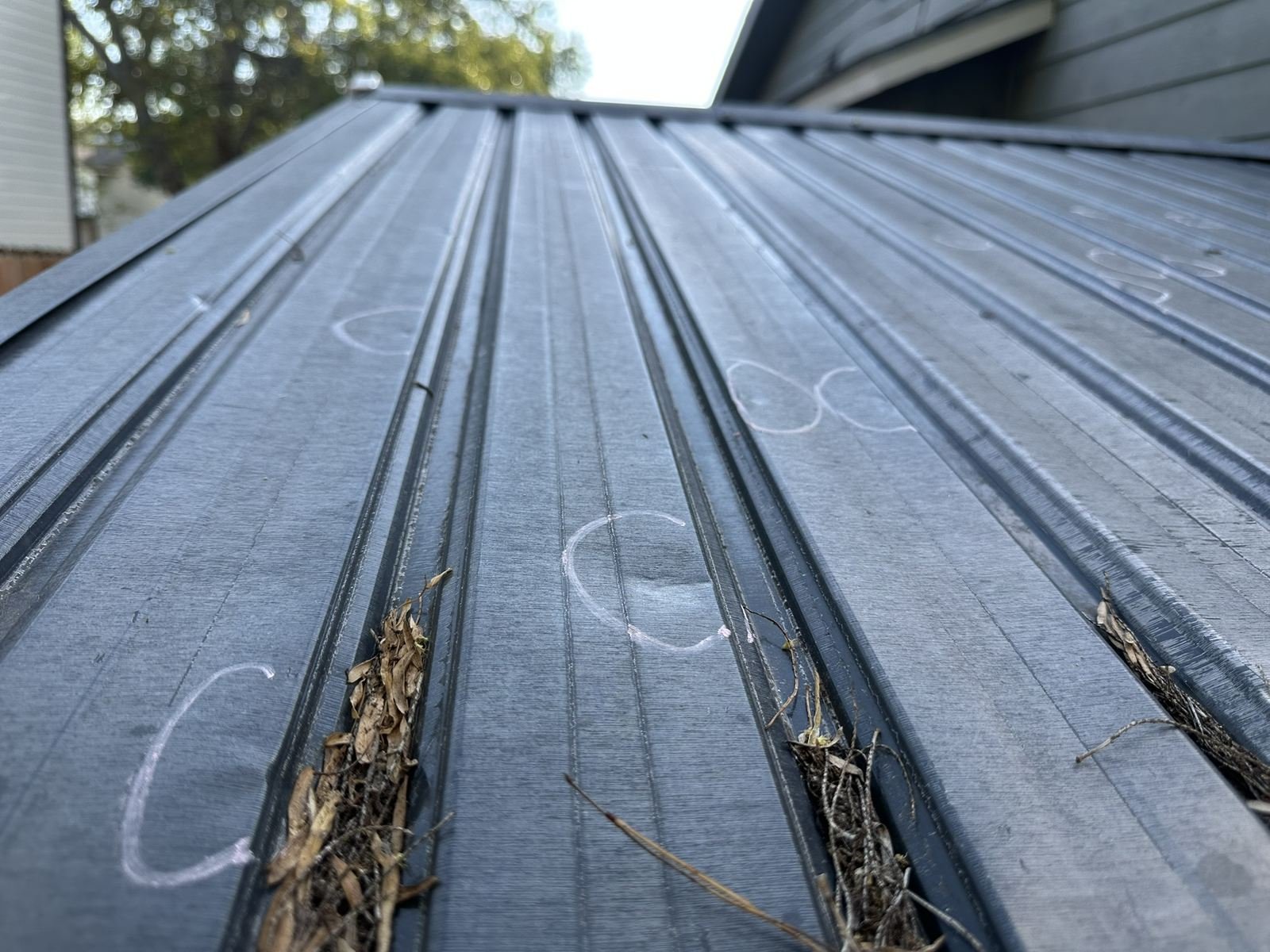
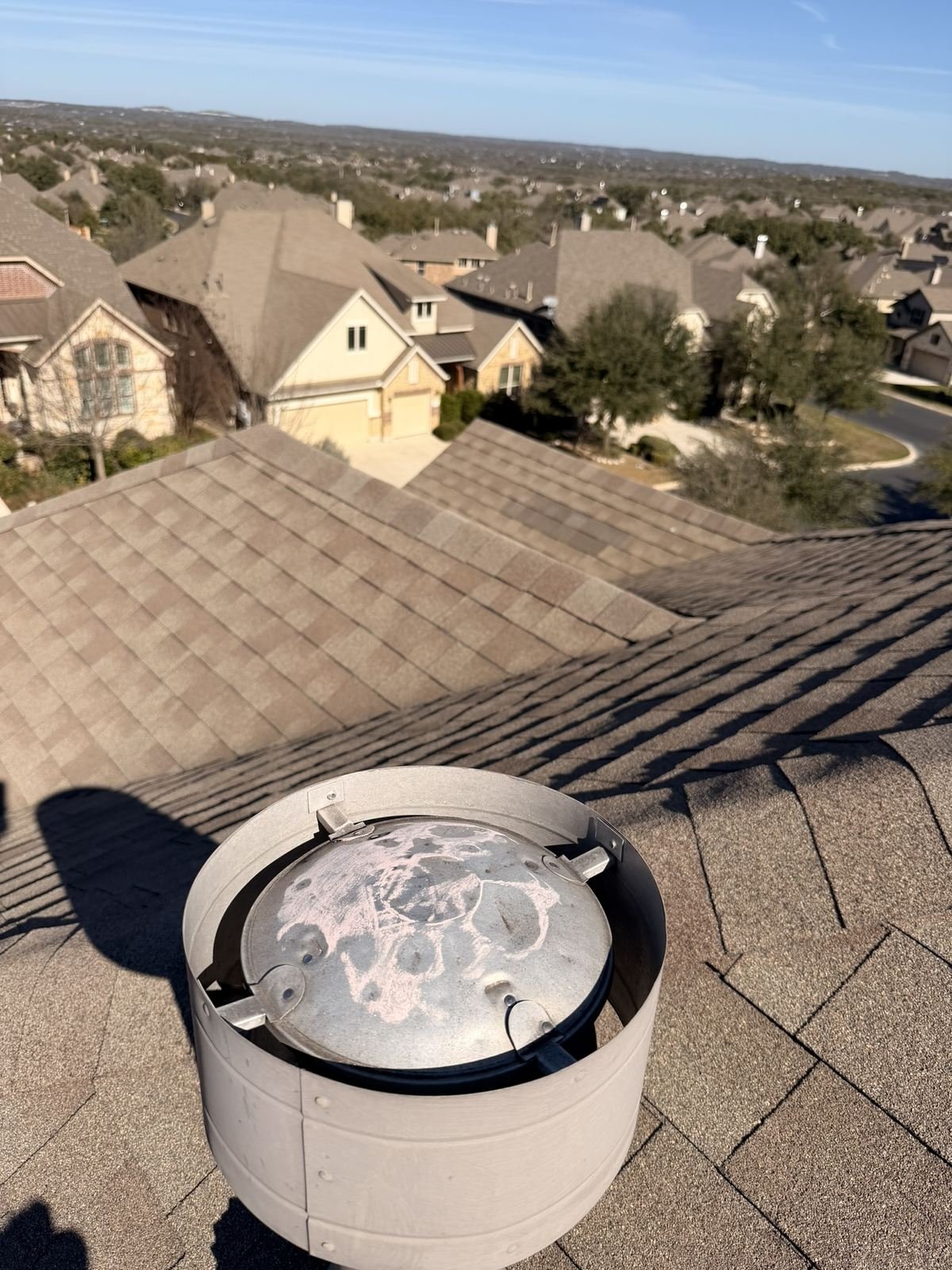
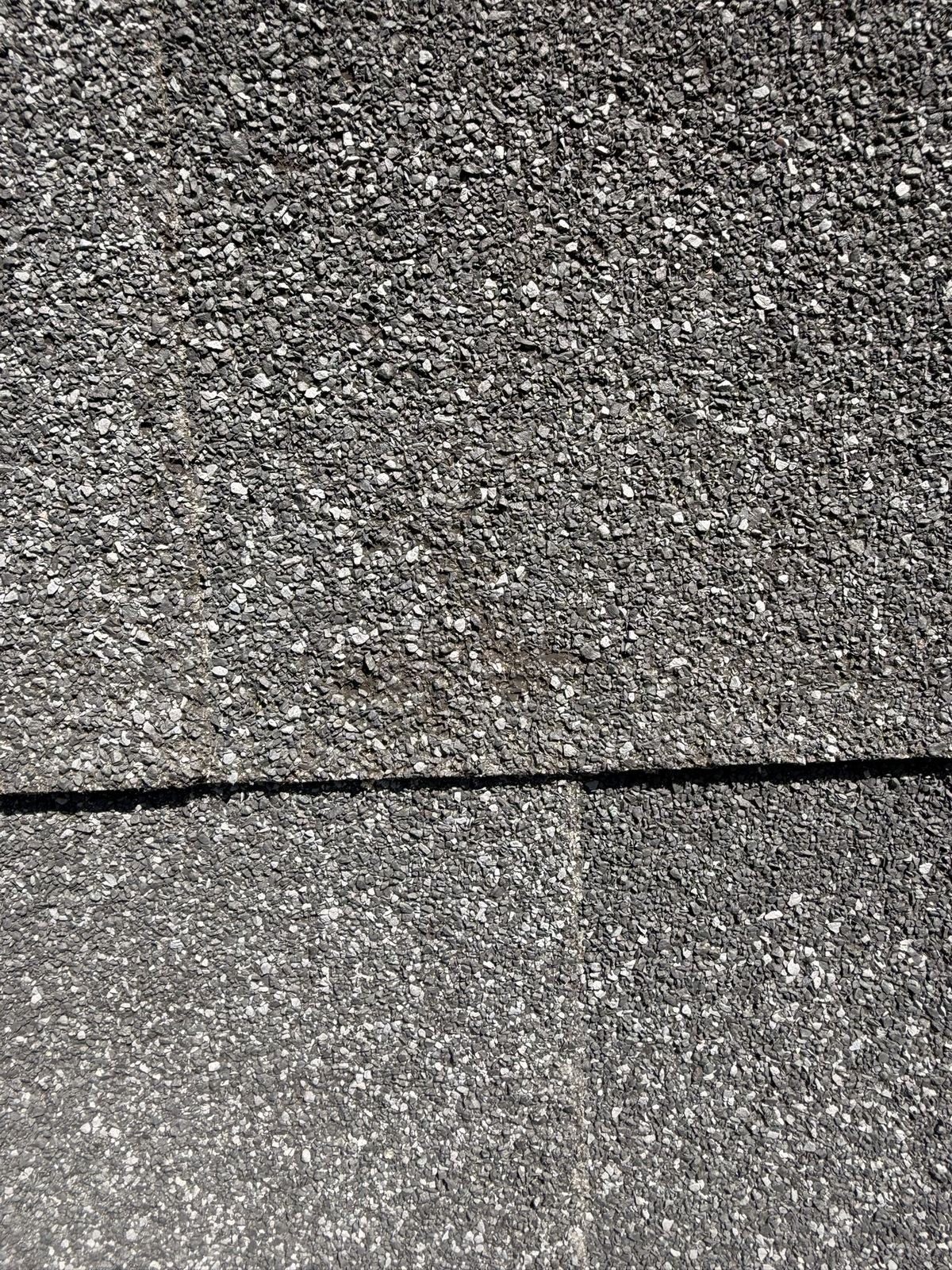
Hail damage, documented across the entire property
14 photosOne storm, one claim — but the damage never stays in one place. We chalk-mark and photograph every hit we find: the roof jack, the shingles, the garage door, the siding, even a window screen or a patio grill. It's the same property-wide standard an insurance adjuster is trained to look for, so nothing gets left off your claim.
 Shed
 Master Flow
 Black shingle
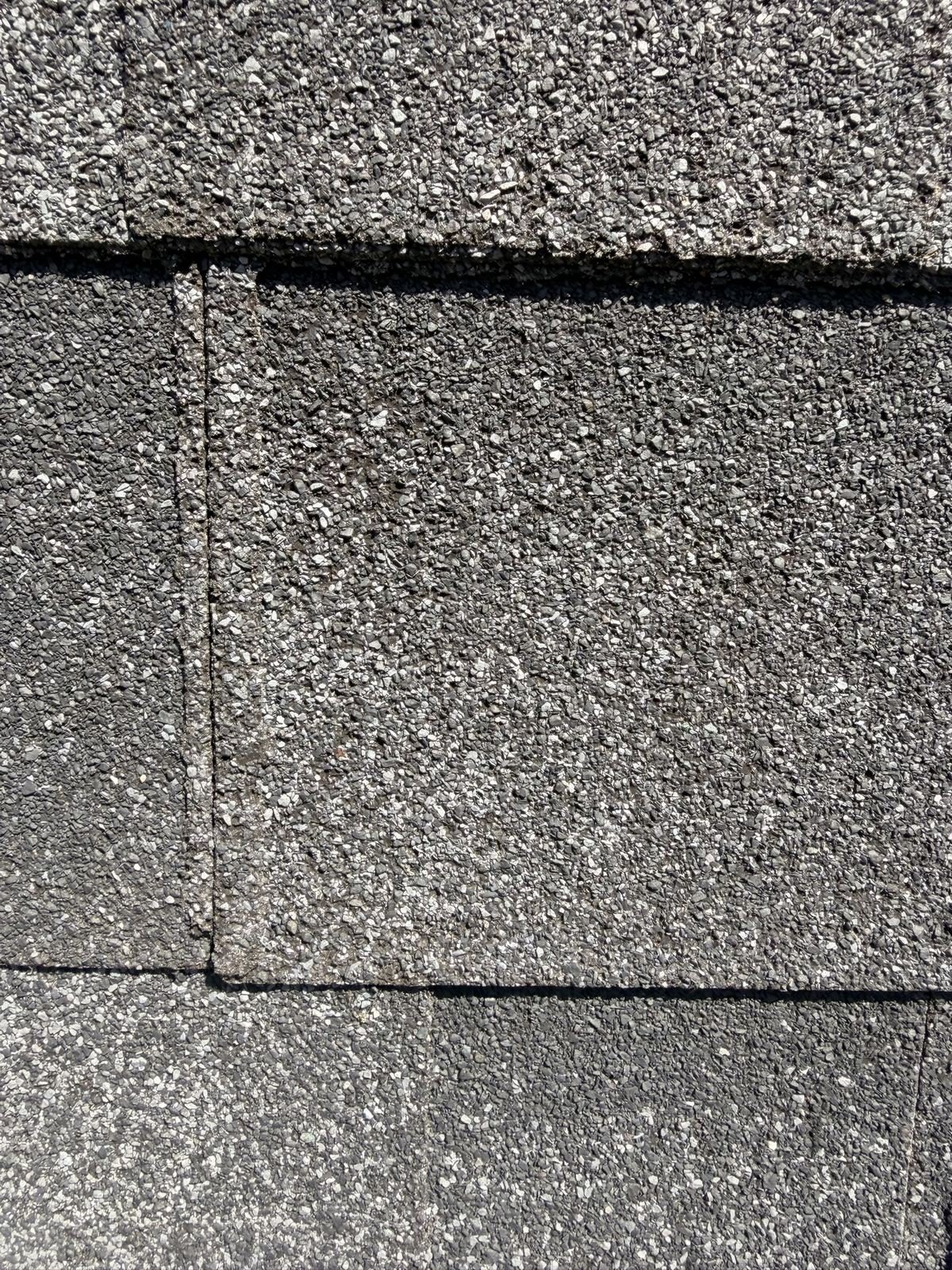 Black shingle
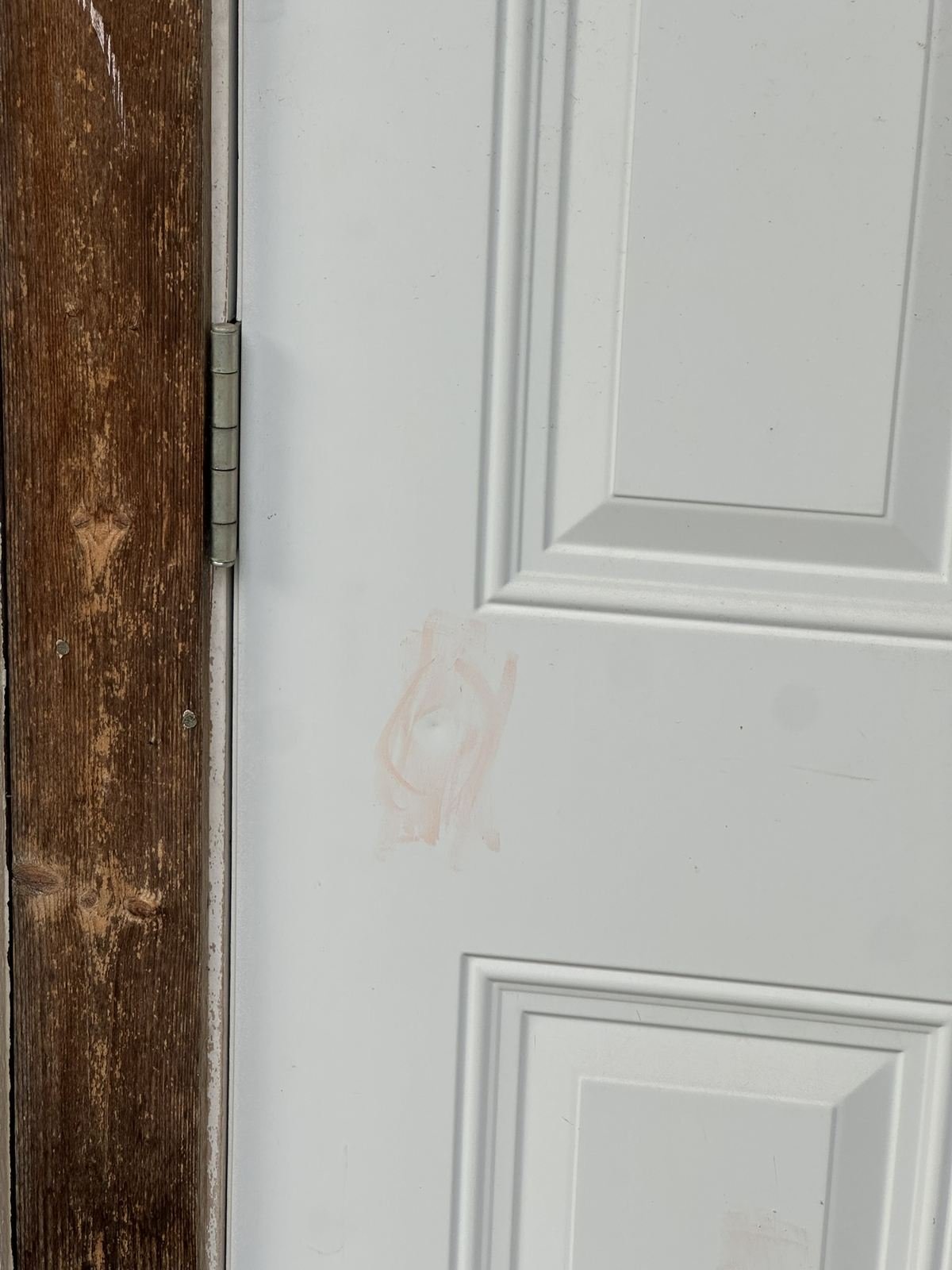 Door
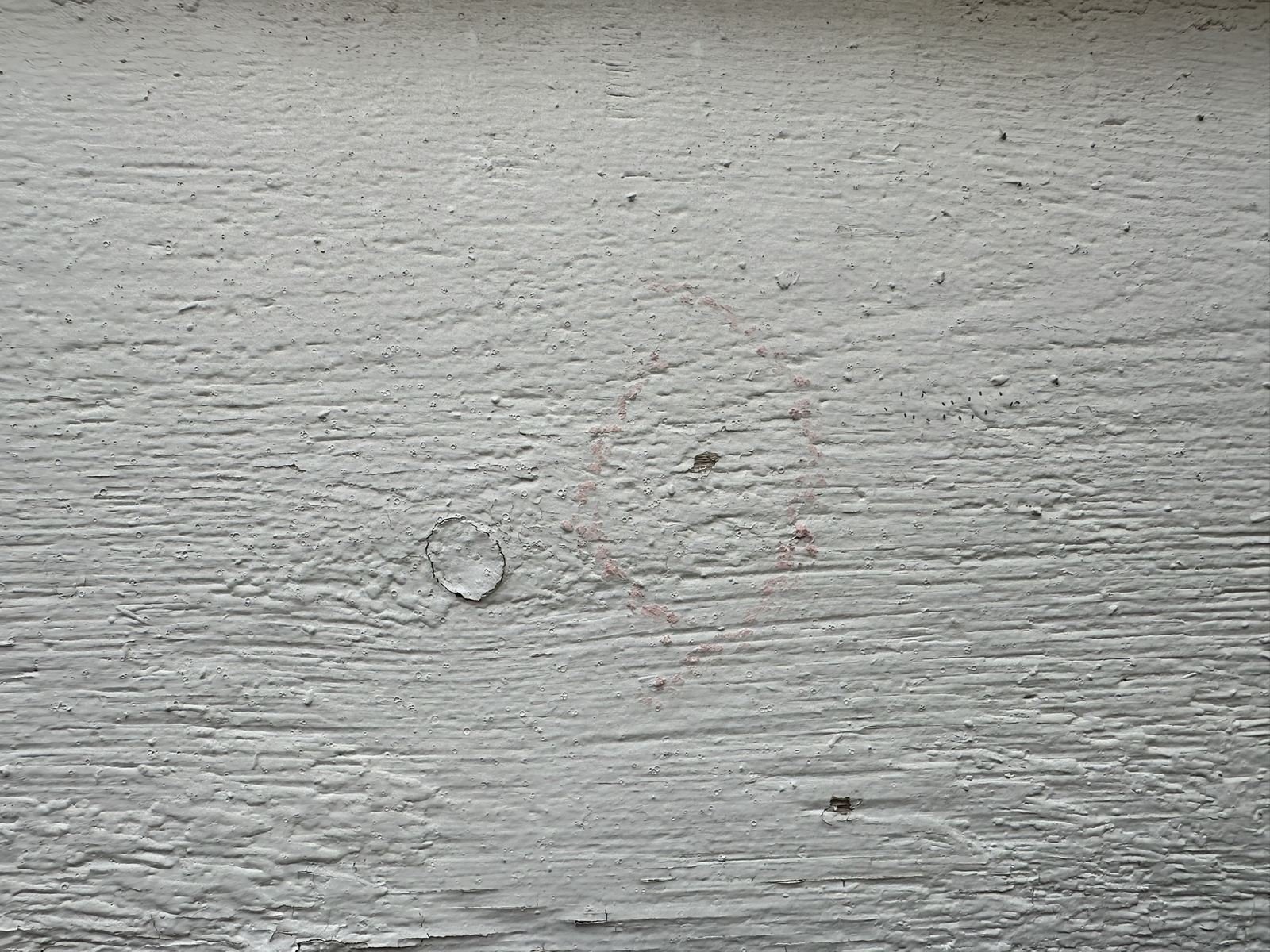 Faceboard
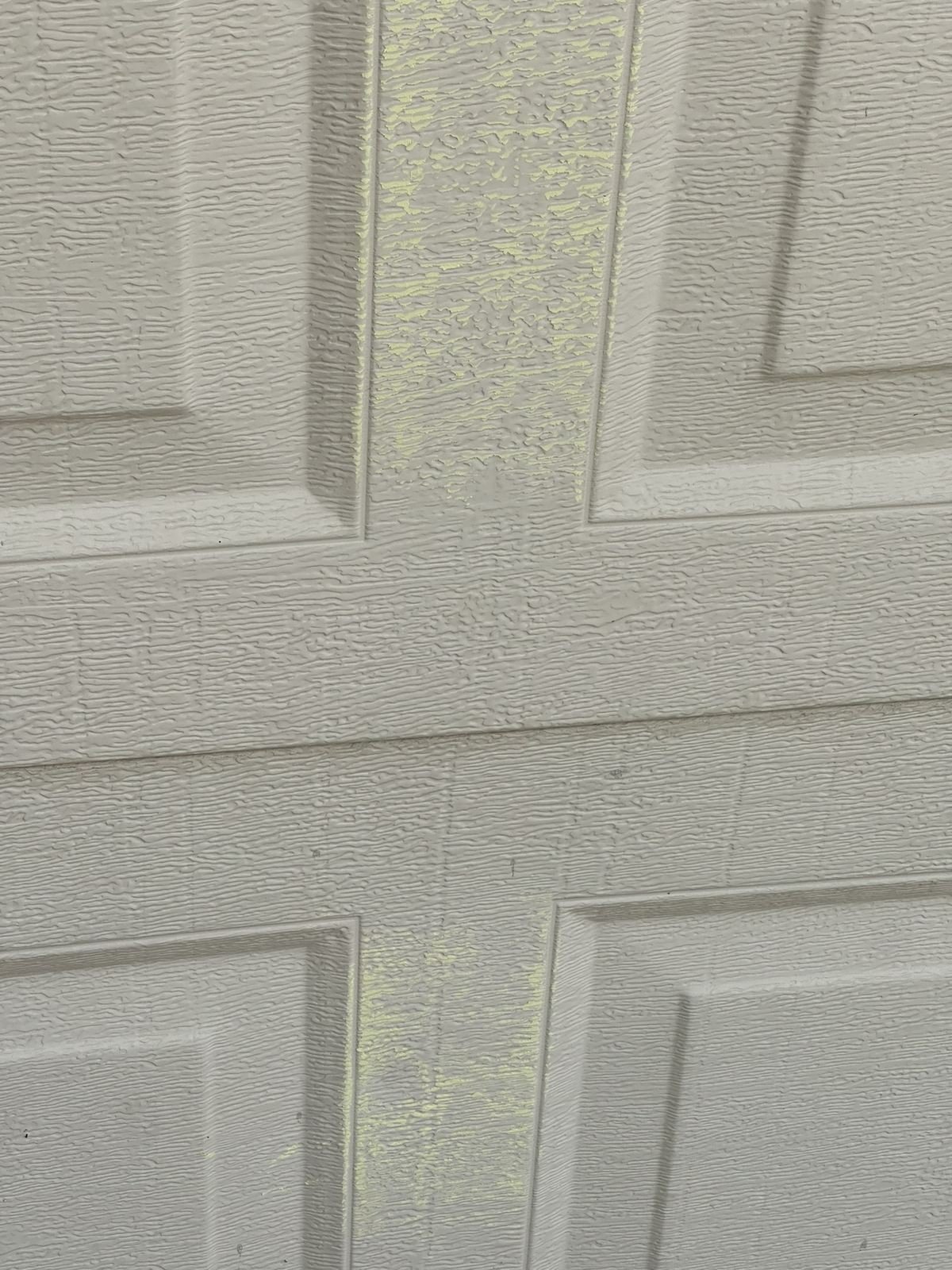 Garage door
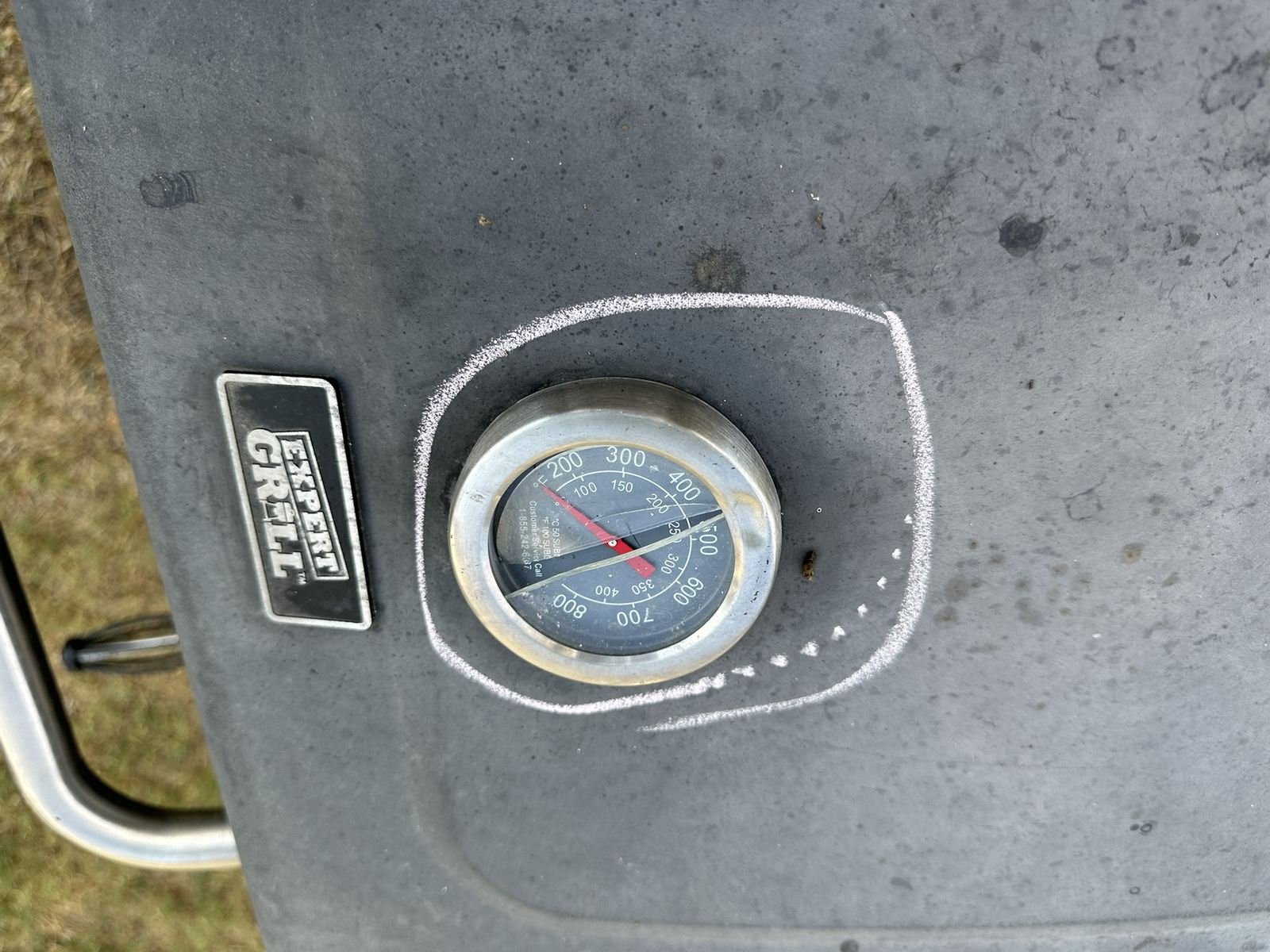 Personal property
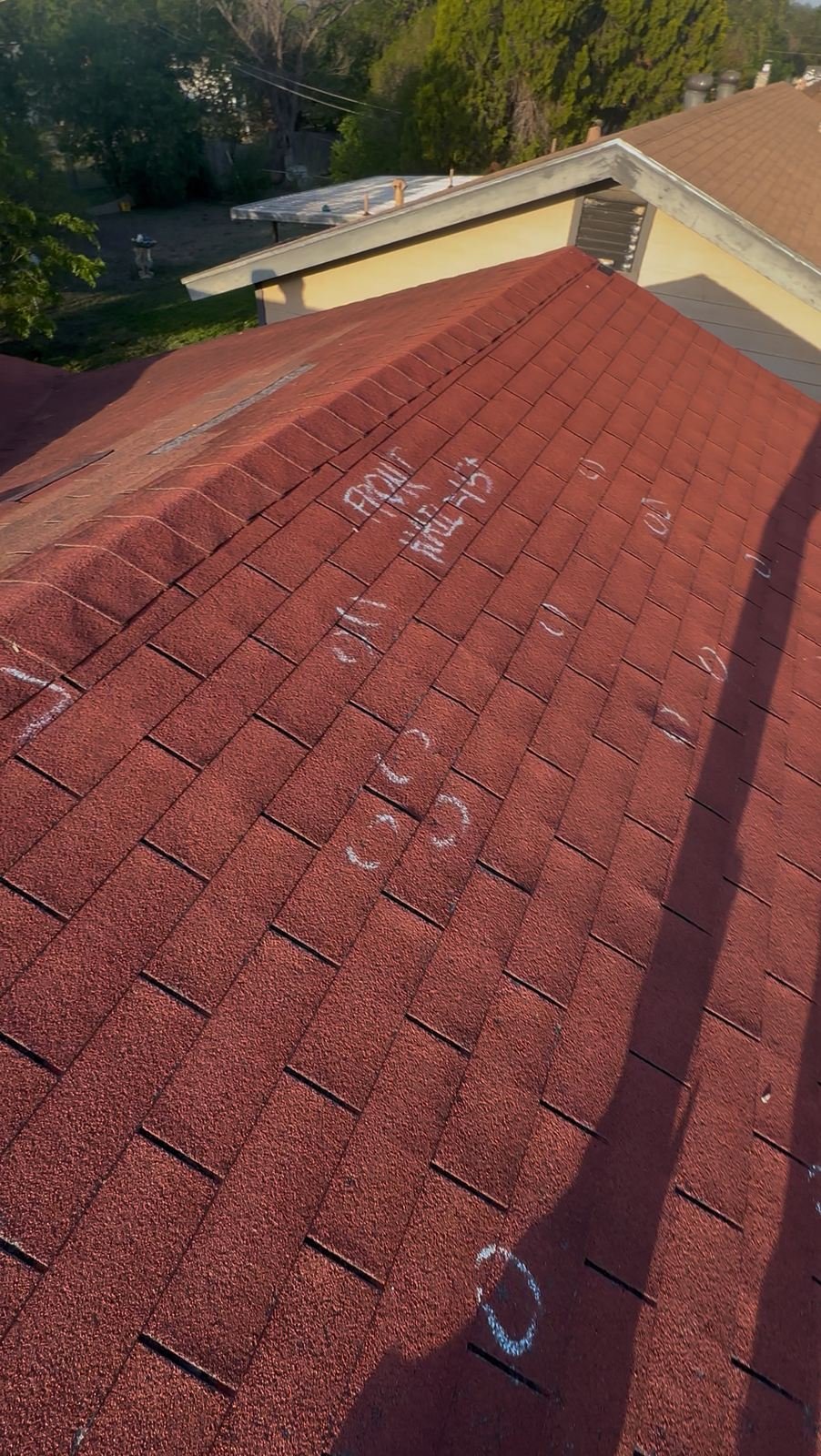 Roof
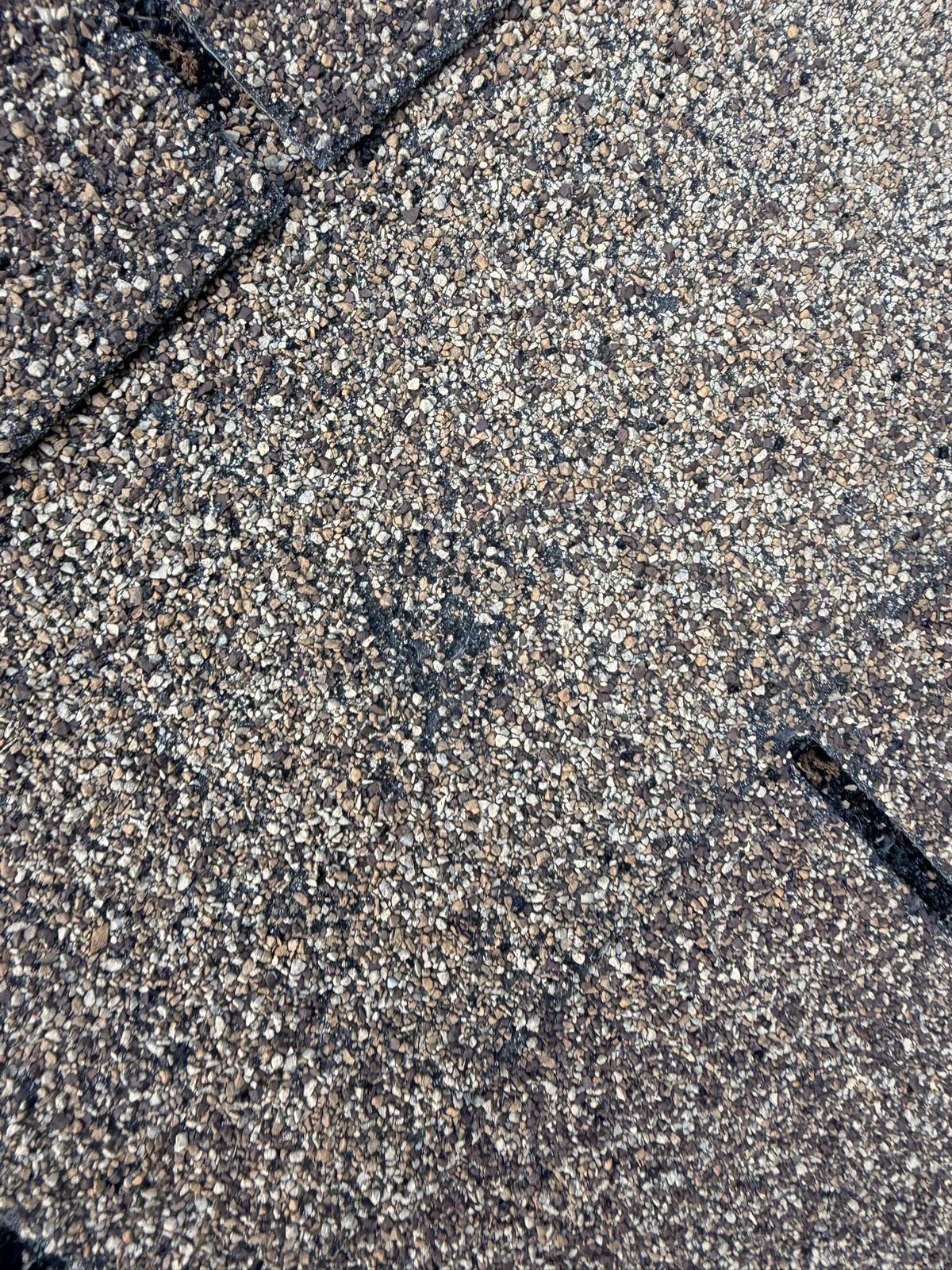 Shingle
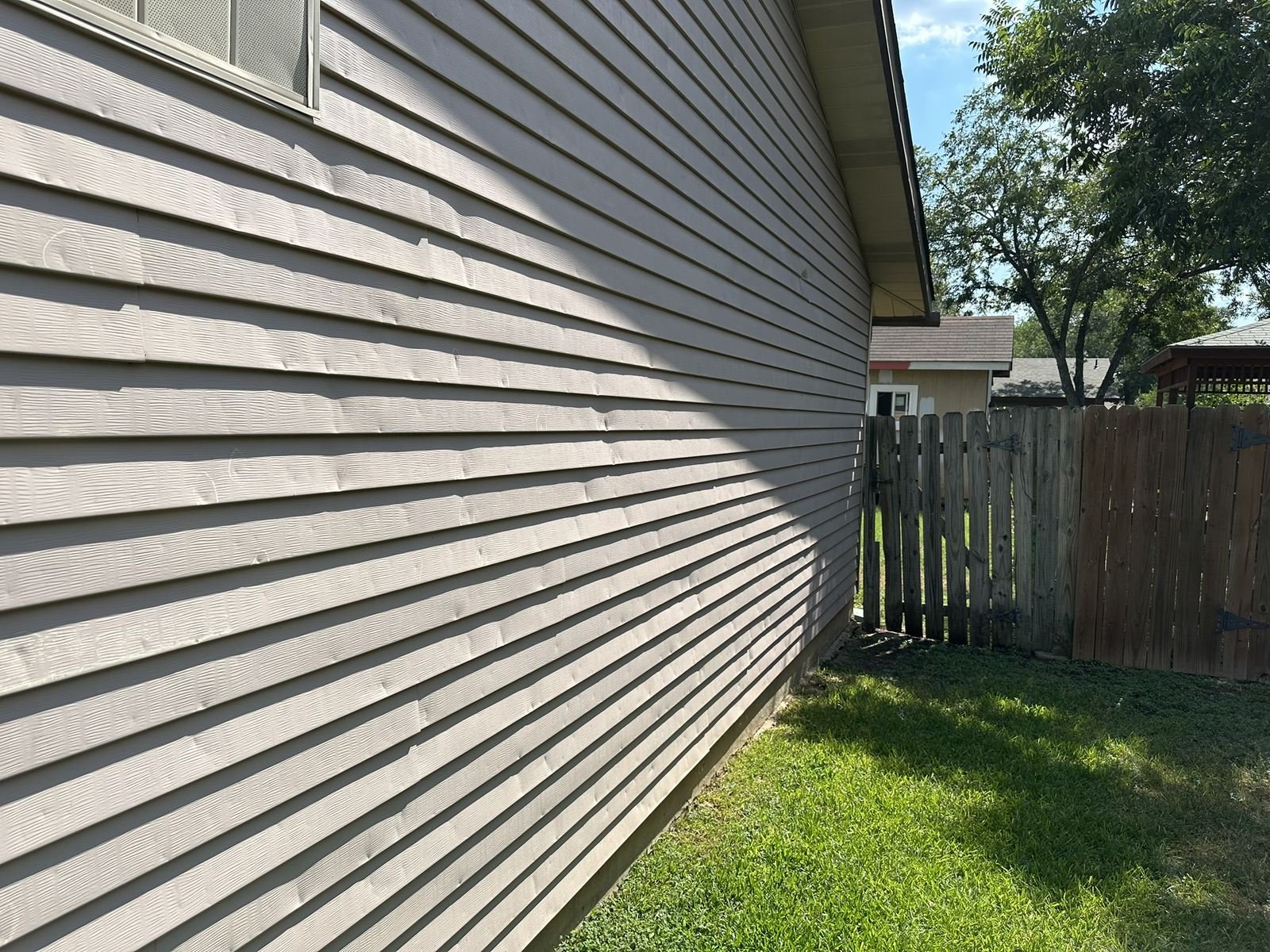 Siding
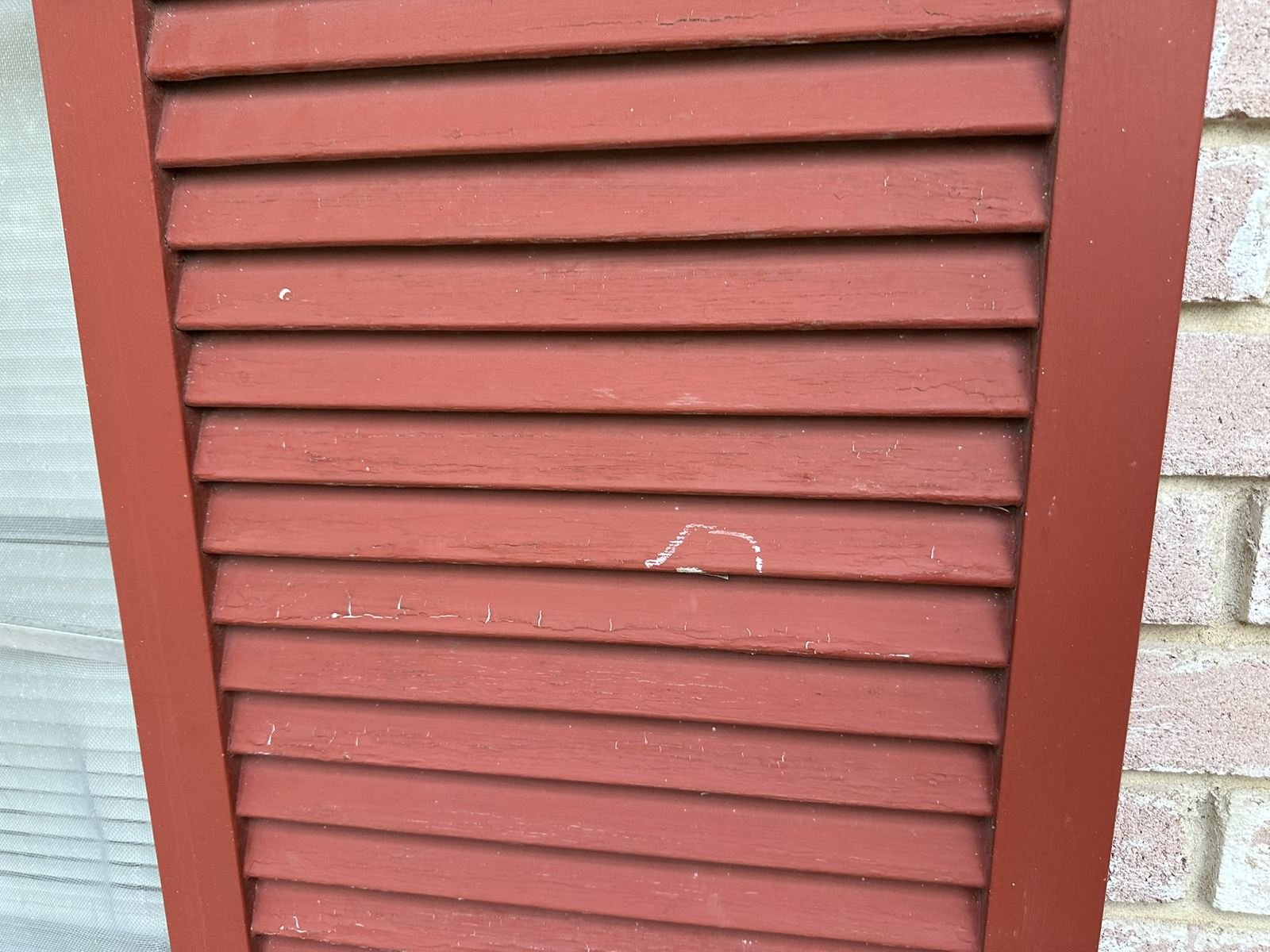 Siding
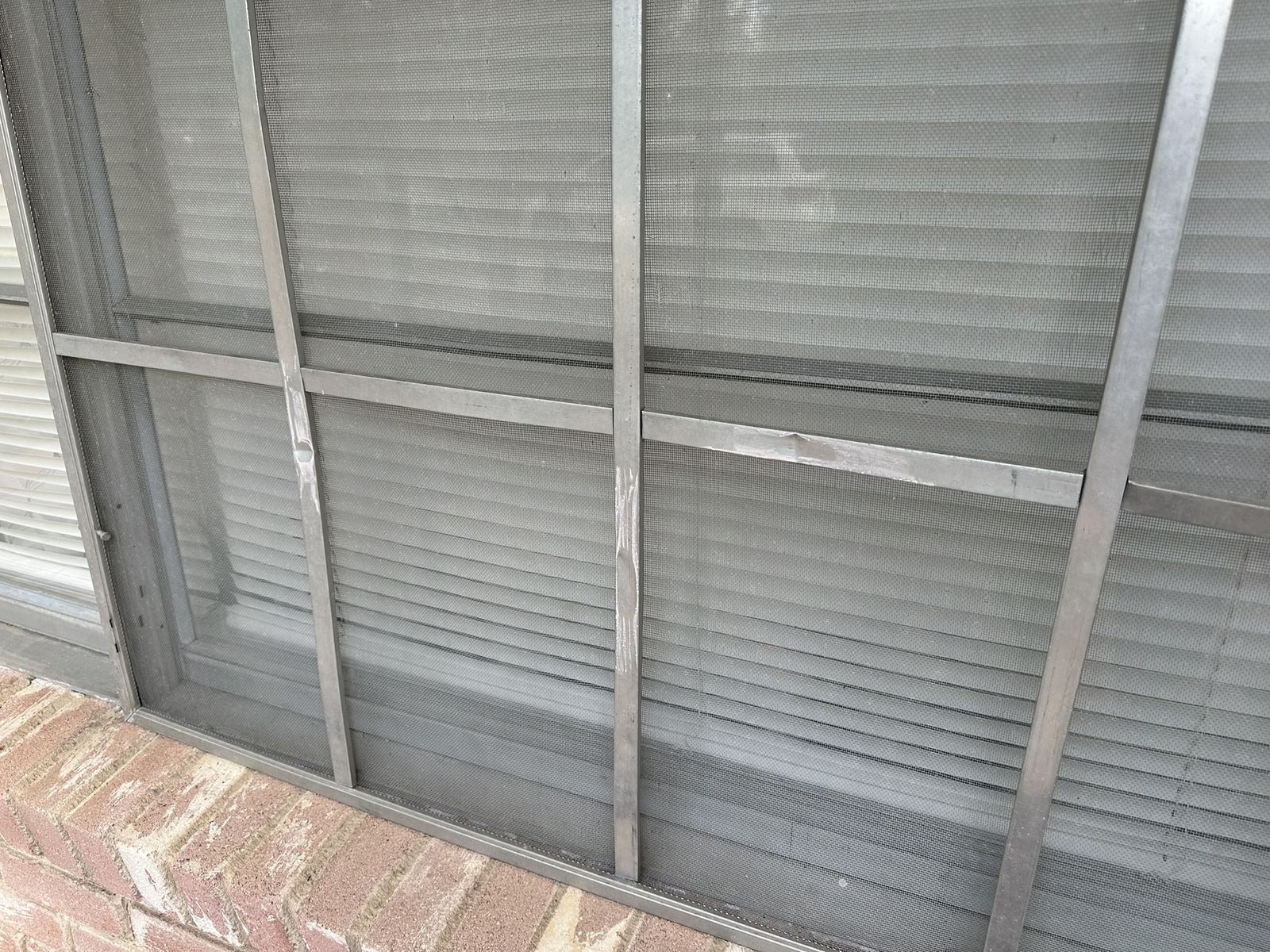 Windows
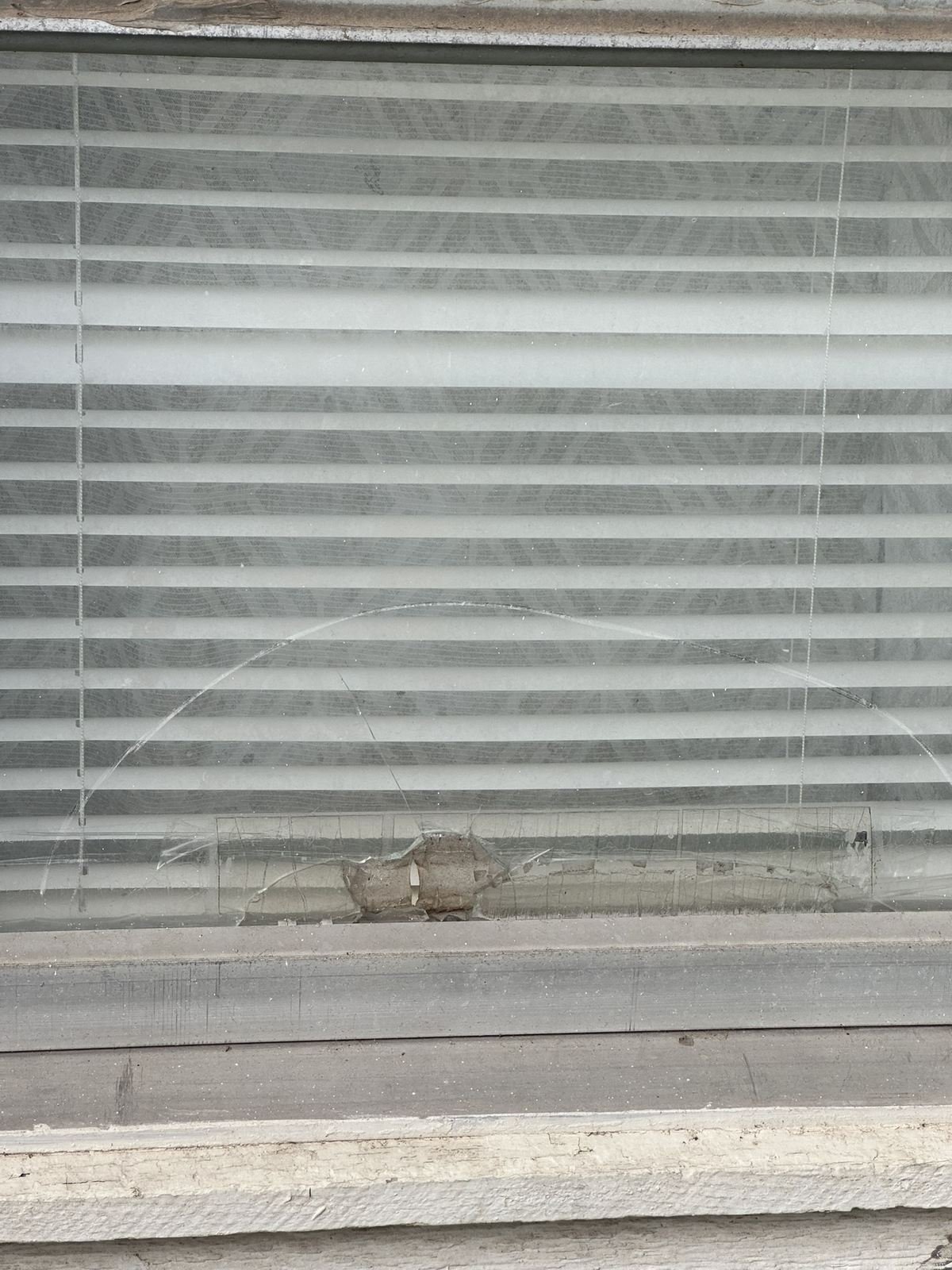 Glass
Wind damage — missing and creased shingles
3 photosWind doesn't have to tear a shingle off to ruin it. A crease breaks the seal underneath, and it fails quietly long before anyone notices a leak. We document every missing and creased shingle we find, because it's the kind of damage that's easy for an adjuster to miss from the ground — and easy for us to prove from the roof.
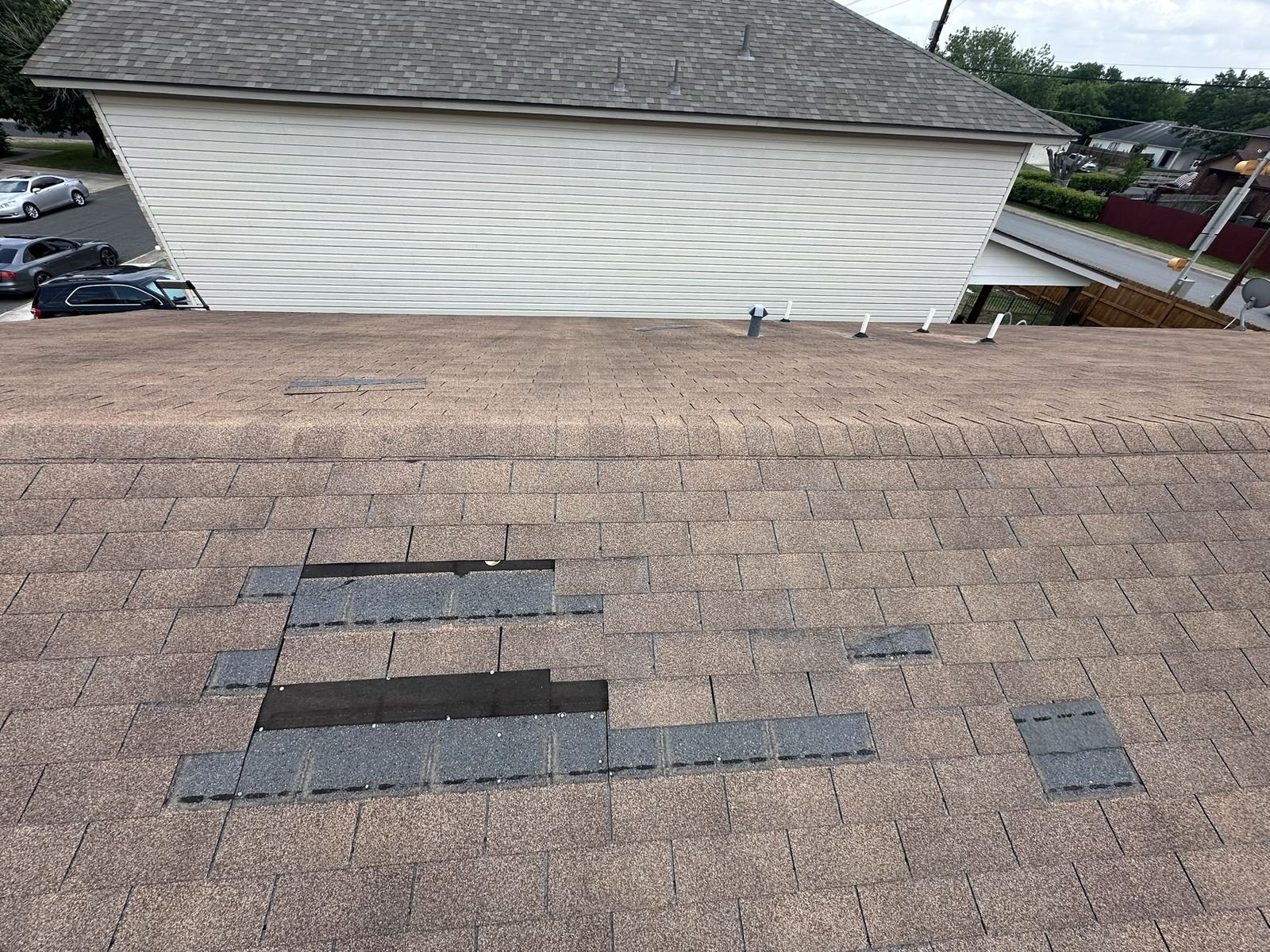 Missing shingles
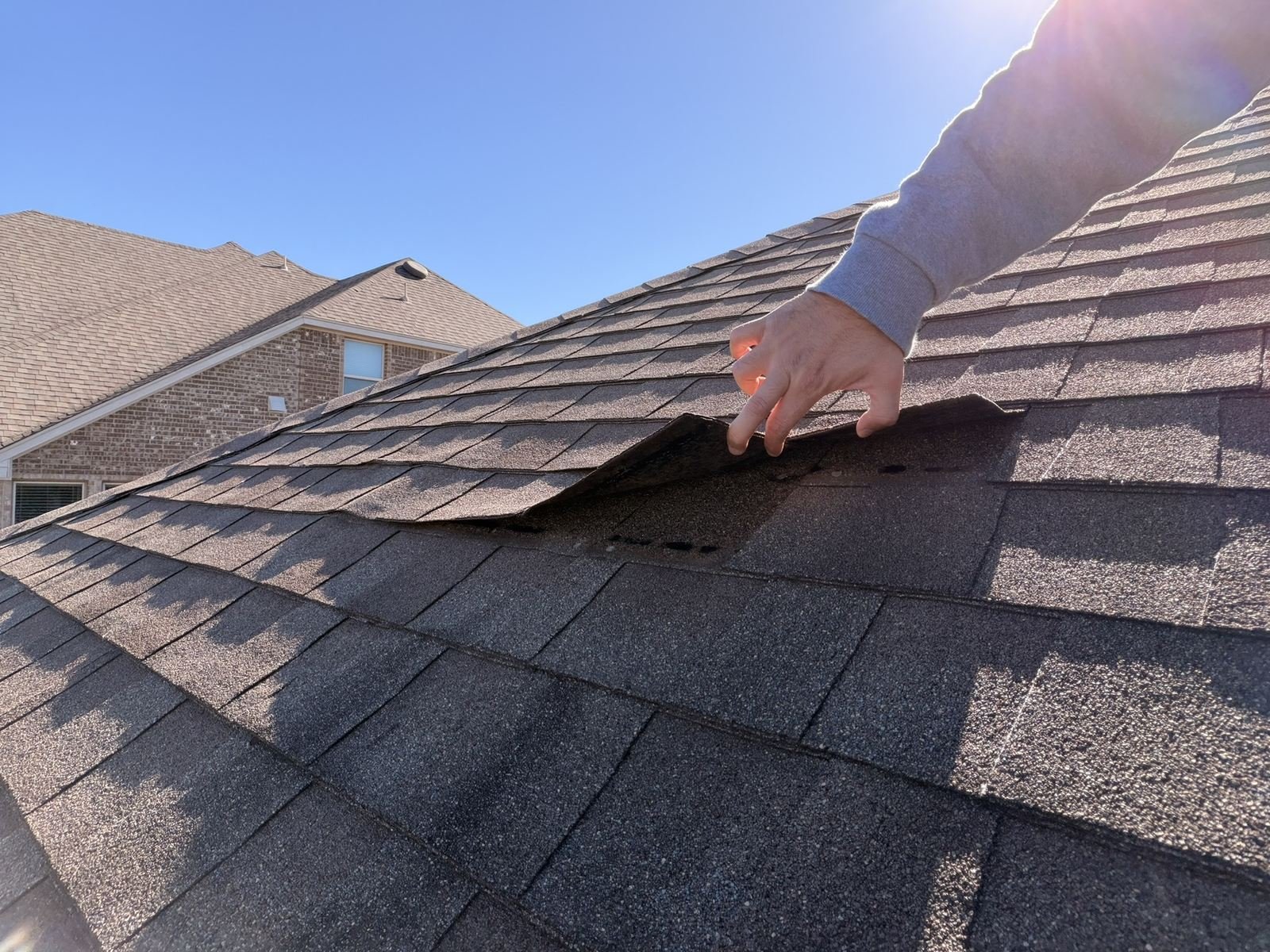 Creased
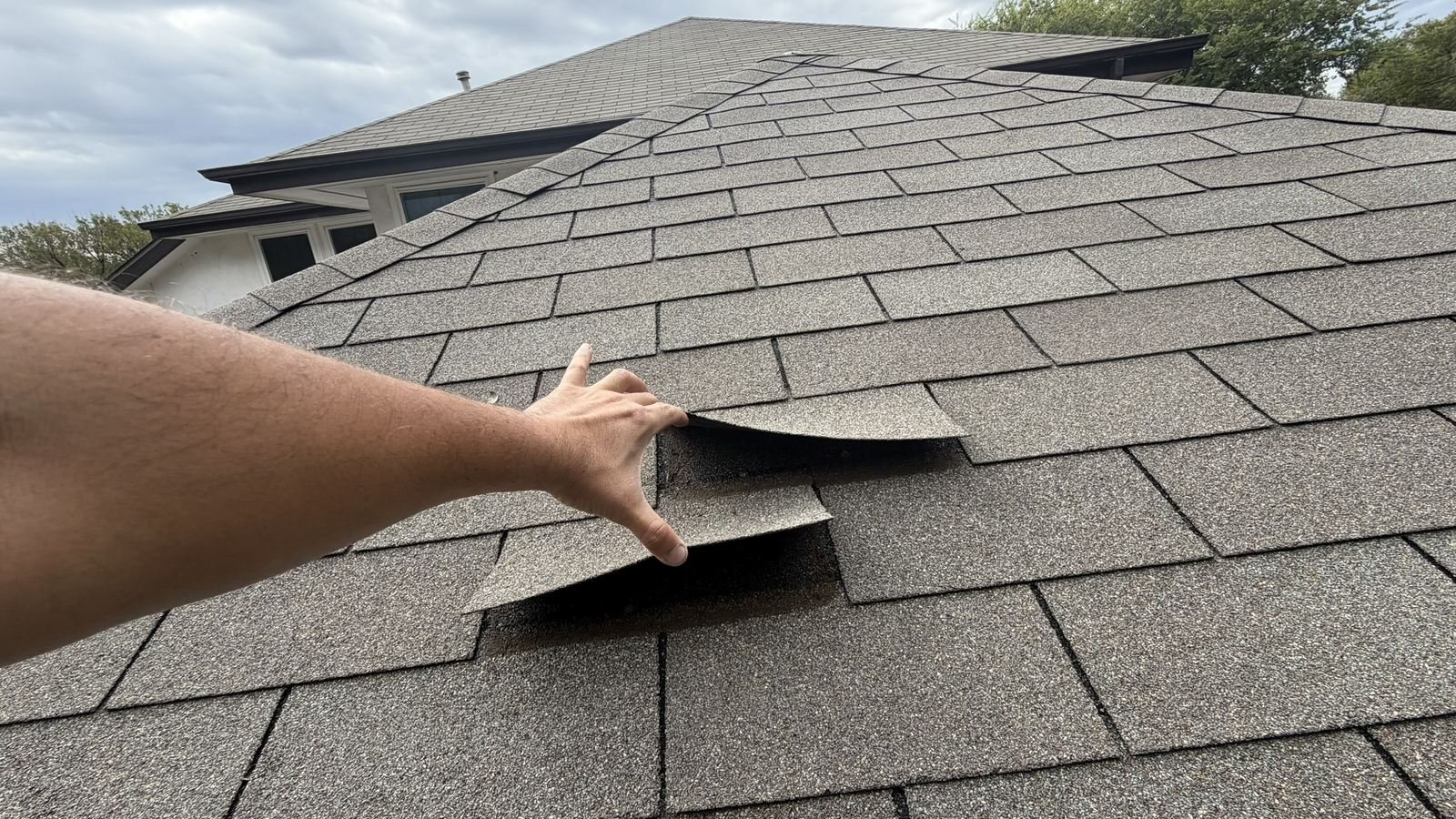 Creased
Roof leaks — the damage that shows up inside first
2 photosA ceiling stain or a hairline crack in the corner of a room is usually the first sign that a roof has already failed somewhere above it. We document the interior evidence alongside the roof itself, so the humidity and staining are tied to the same claim — not treated as a separate problem you have to fight for later.
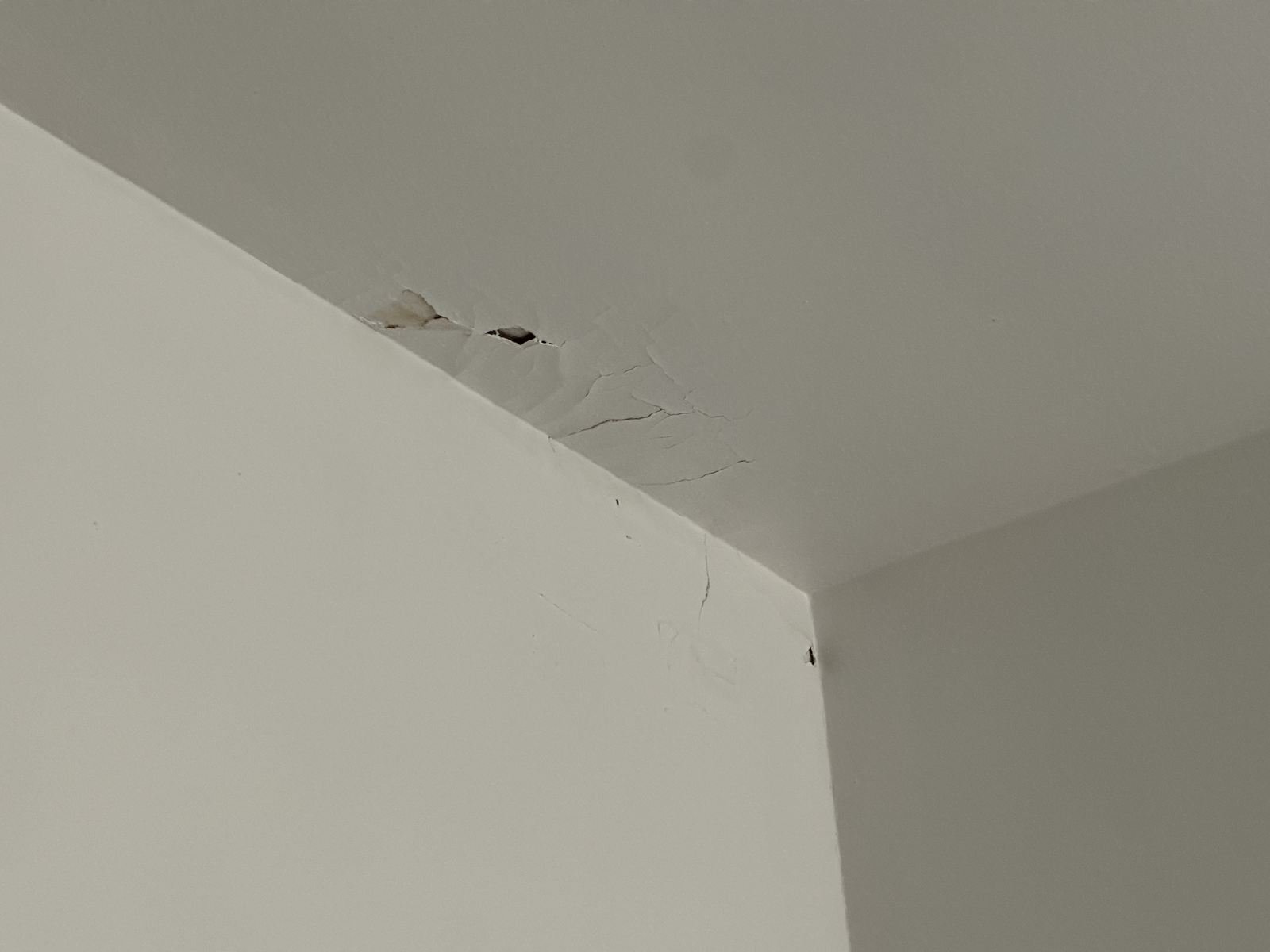 Humidity
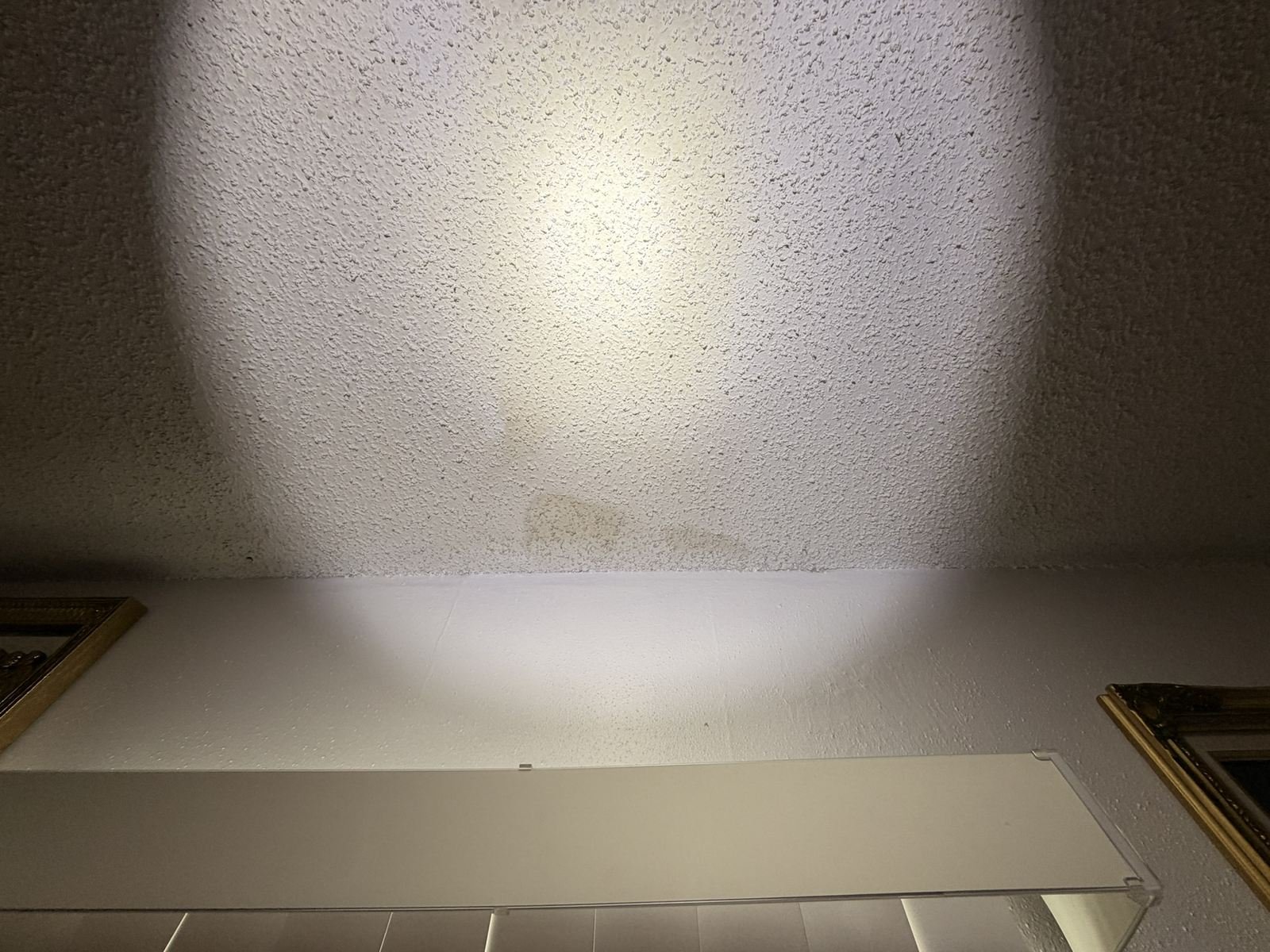 Stains
Built to code, not just to pass
7 photosThe difference between a roof that lasts and one that doesn't is almost always buried under the shingles: the right board spacing, the right plywood thickness, the right number of underlayment layers, the correct pitch and truss spacing. We document every one of these details on every job, so you know your new roof was built to meet code — not just to look finished.
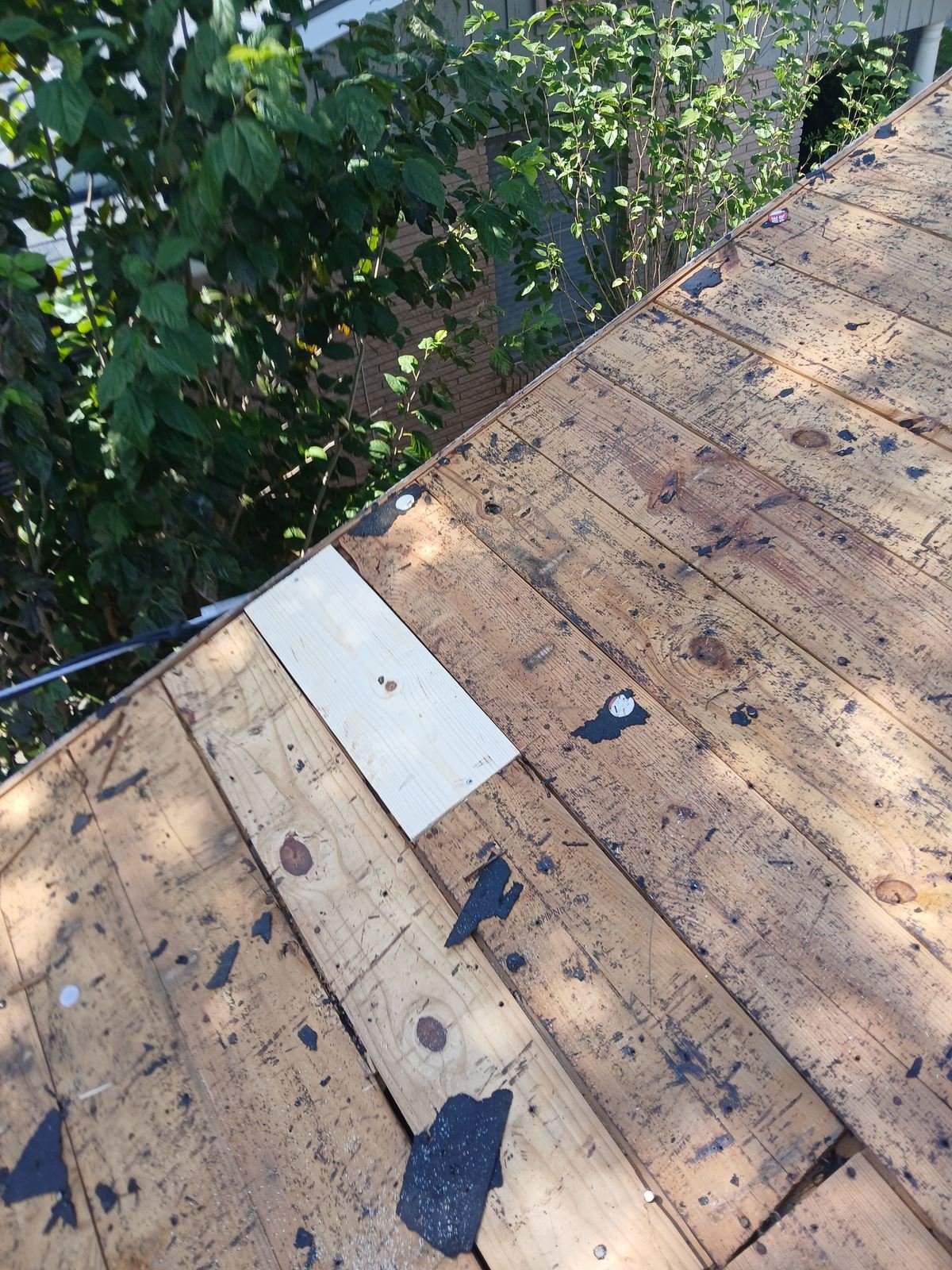 1x8 board
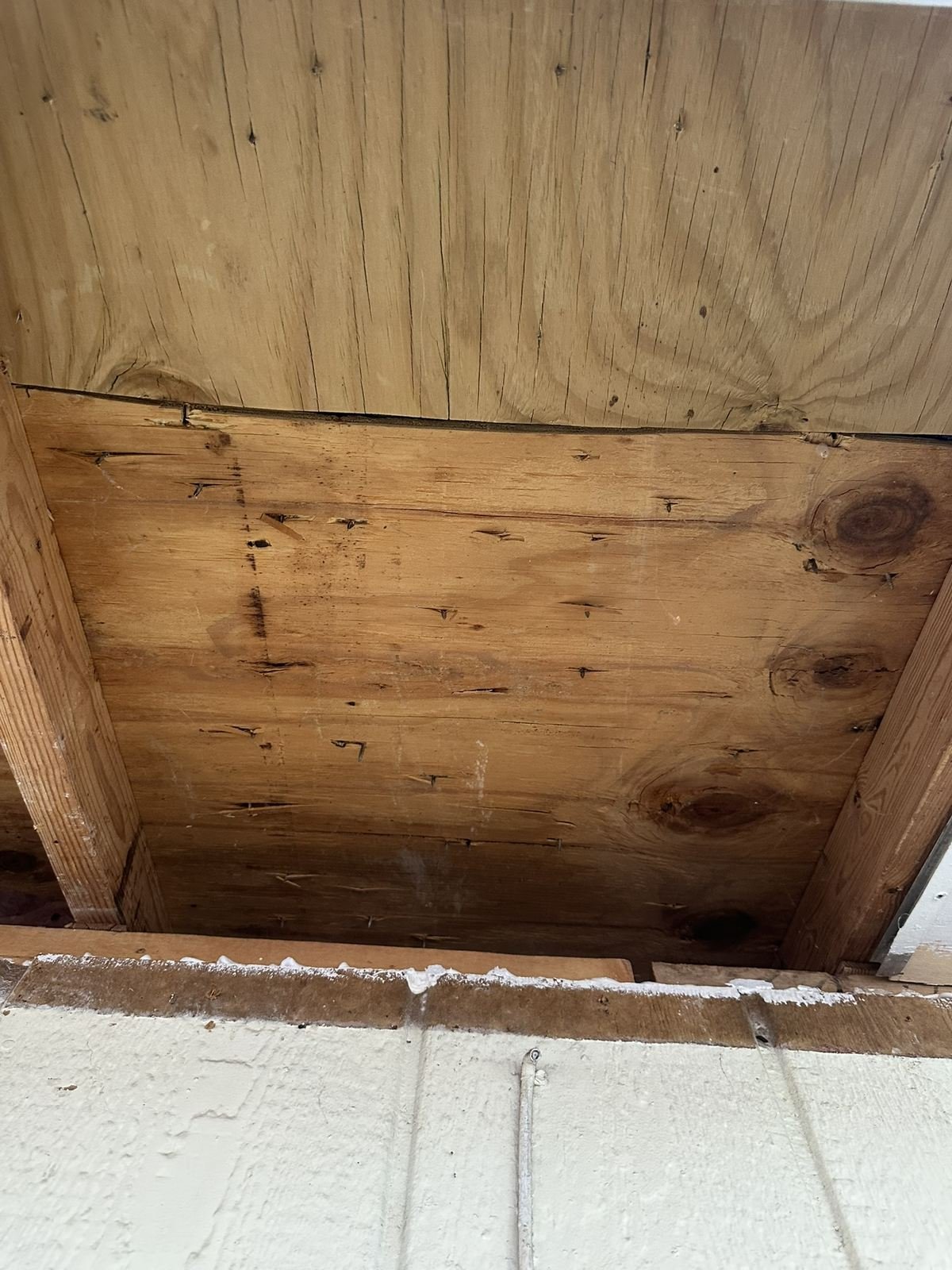 3/8" plywood
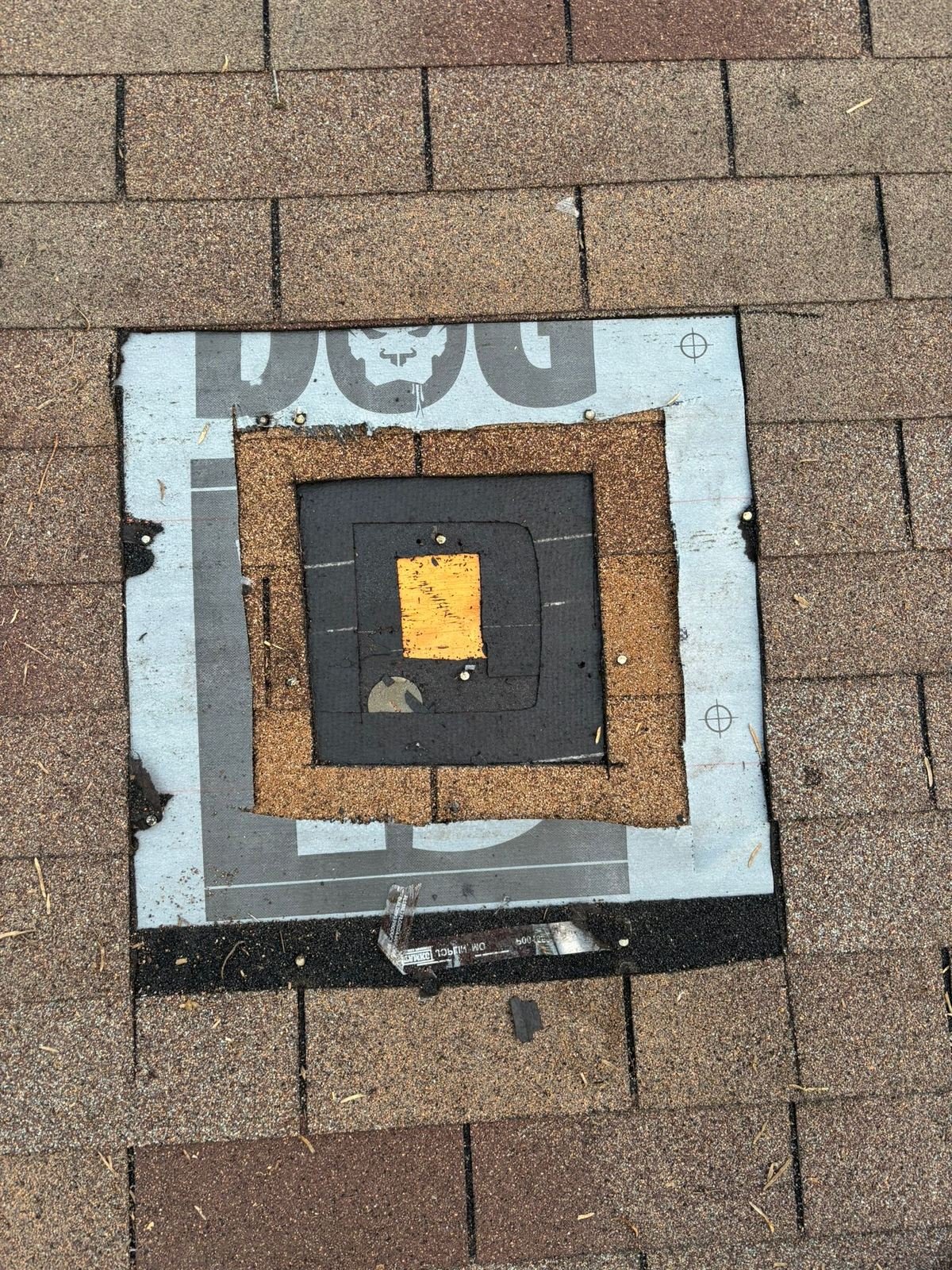 Layers
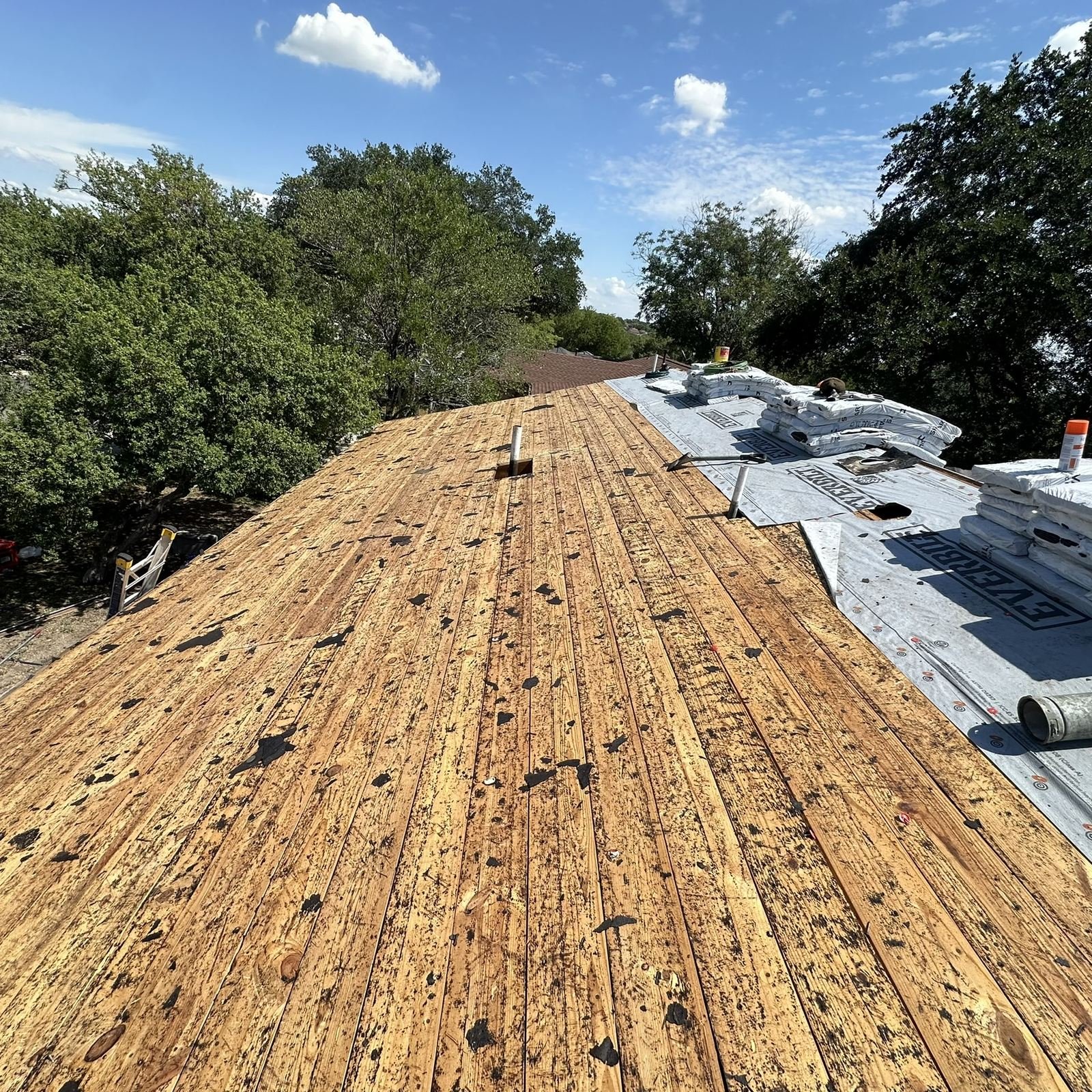 1x8 board
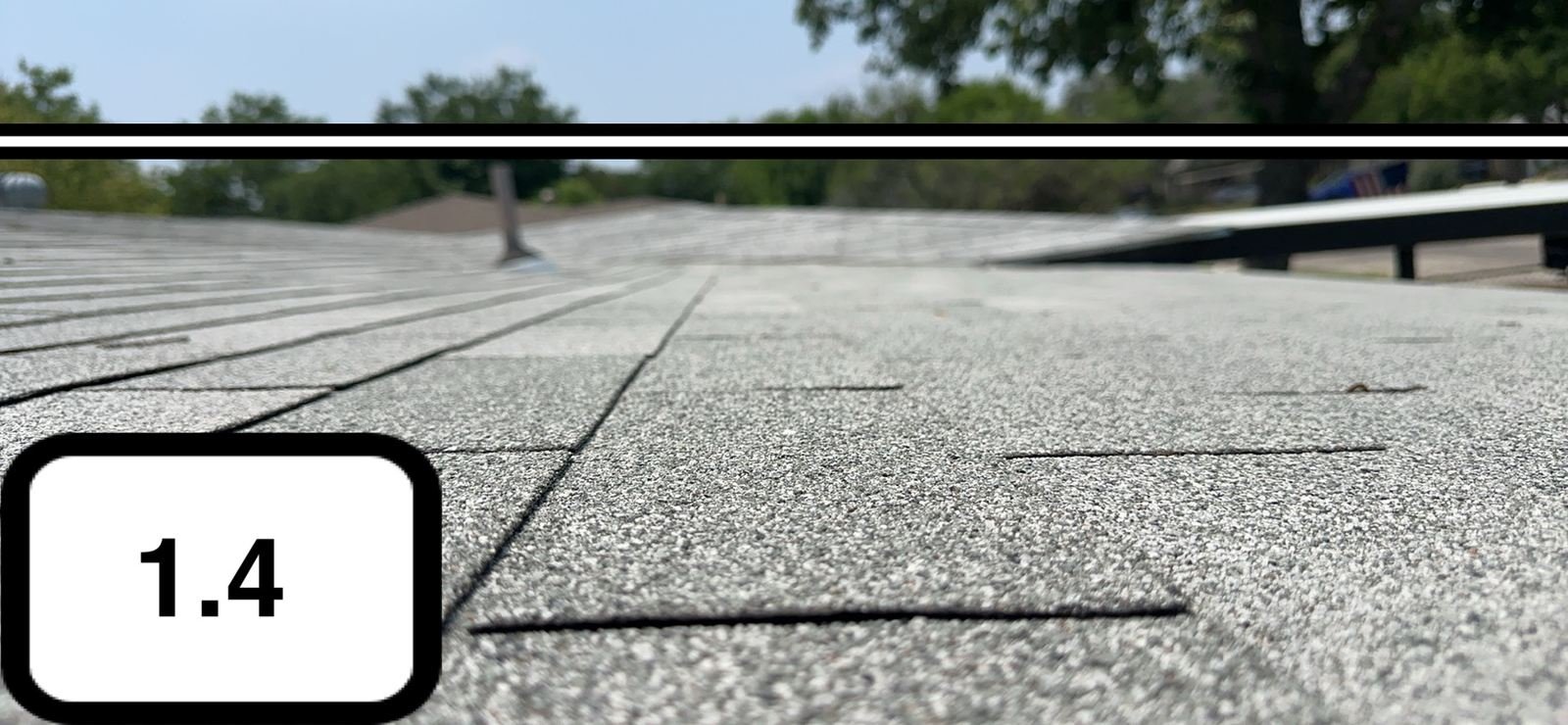 Pitch
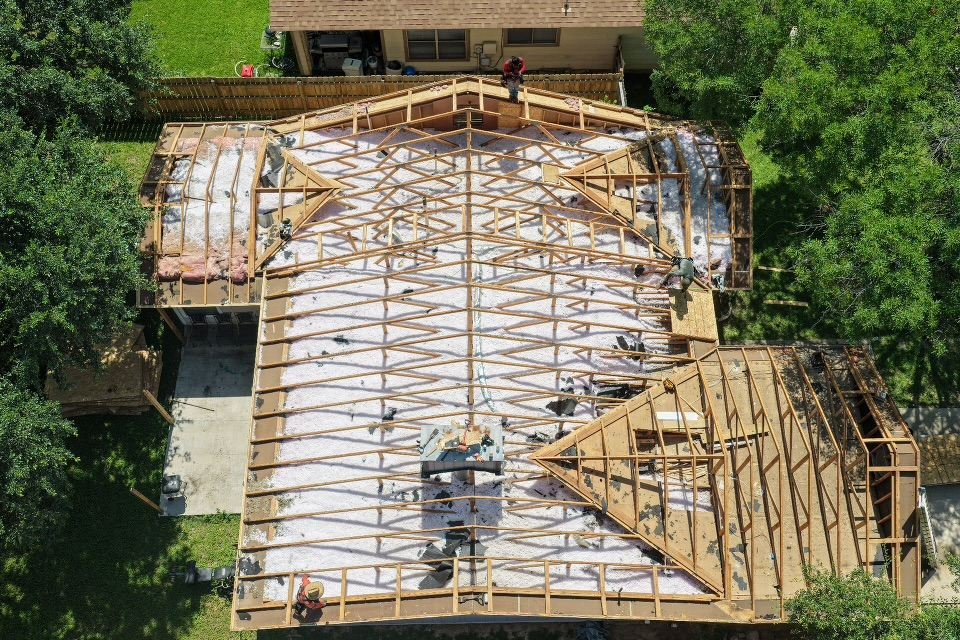 Trusses
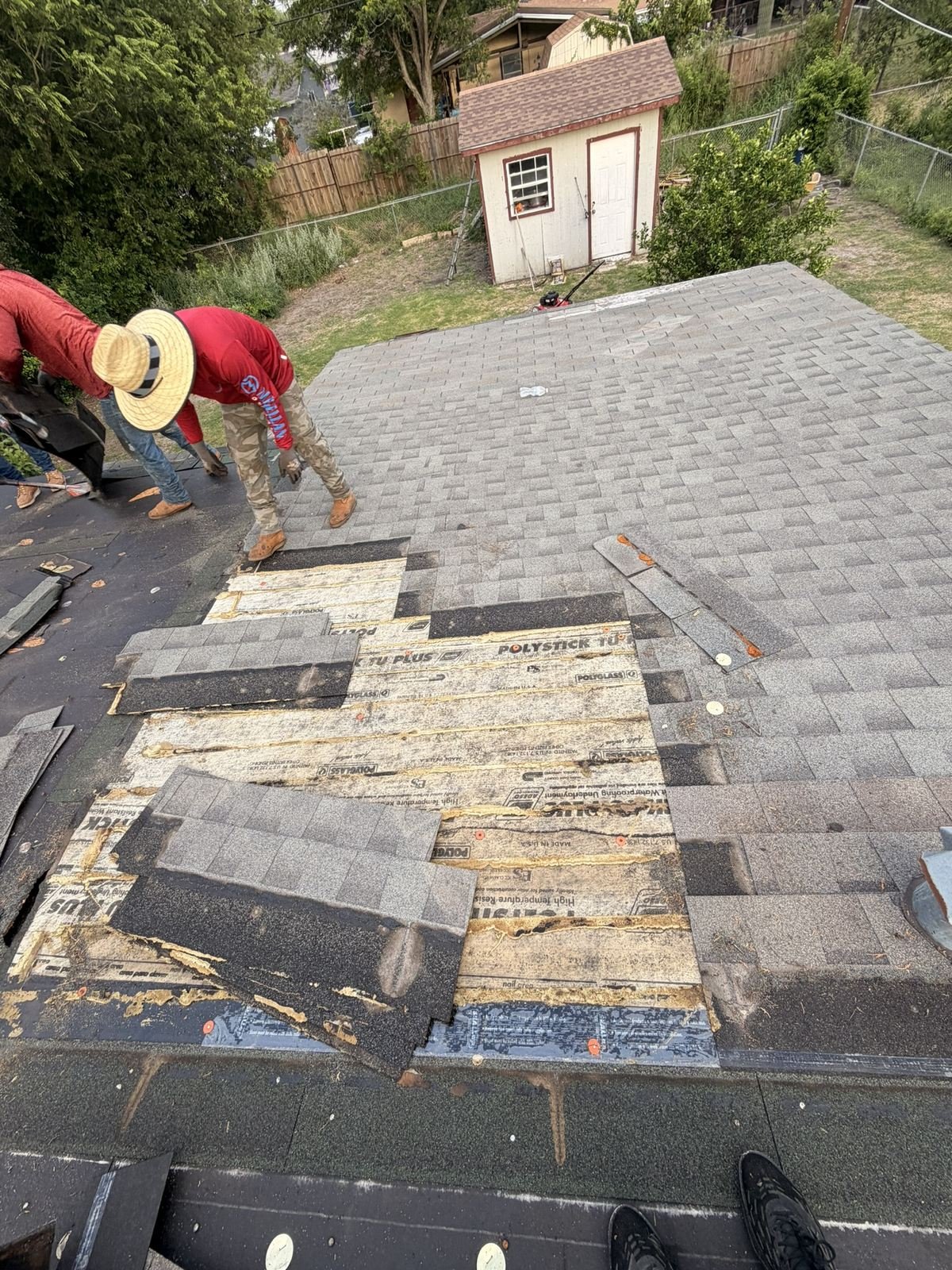
What we find when another crew installed it
1 photoThis is a tear-off on a roof installed by someone else — and it's a common sight. Skipped underlayment, rushed flashing, shortcuts nobody was ever going to see from the ground. It's exactly why we document our own work at every stage, and exactly why a second opinion before you re-roof is worth asking for.